Millwall Dock & Deptford

wharf002

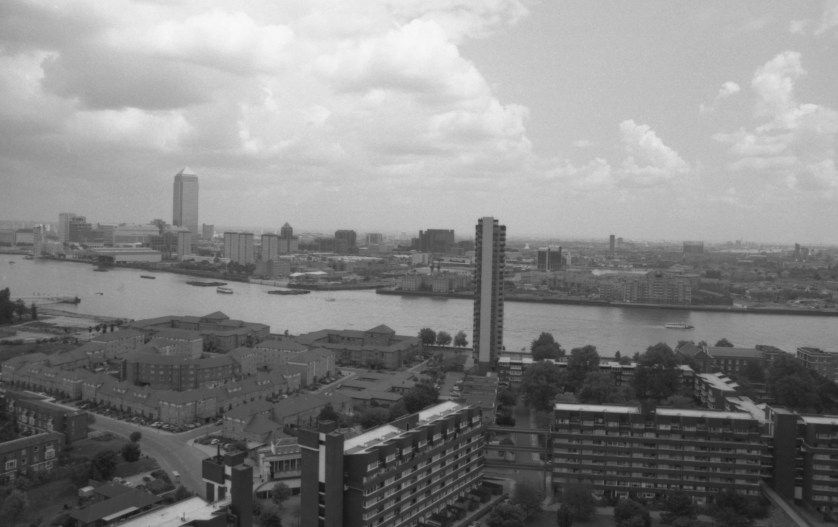
This is where my photography journey began. My dad belonged to the team of professionals who regenerated Deptford in the early 1990’s. It’s his photo really because he was the one who encouraged me to climb to the top of one of Deptford’s many high rises. With my hard hat in tow and the wind blowing vigourously in my face we both climbed in the builders lift together.

My photography tutor at Goldsmiths introduced me to the term ‘thatcher’s needle’. It was an appropriate term, seen as my dad was a socialist and I can proudly say we had a picture of Lenin in the hallway of our family home in Forest Hill.

Little did I know this would be the last home he lived in (depicted in the far right cluster of homes, ironically). He died in Kenya on Sunday 17th November 2013 and this photo is in his memory. This is when he was the dad I loved and cherished and before the life he chose, that broke him.

Taken in 1994 on a Pentax Asahi, 35mm SLR. Morgan Stanley, Credit Suisse First Boston, HSBC, Citigroup and the FSA had been occupying the Wharf for only three years. Thatchers Needle (as it was known then) stands alone at this moment in time. The Wharf dominates the skyline and those who live in poverty on the other side of the river cannot be seen. The river Thames is a metaphor for the divide between the rich and the poor that exists within global society and throughout South East London.

As English society continues to meander its way through the process of globalisation, how globally aware will our children become. In my late adolescence thinking beyond my back garden I only got as far as St Paul’s Cathedral and the Post Office Tower. Communication is now more fragmented than ever and the time my children spend on their phones or tablets is used viewing films they are interested in. Make up videos, slime films and epic fails are a few of the YouTube videos I see played by the young people in my home. They can filter out the media content they have no interest in and like most of us, they do. Knowledge is everywhere and it’s going to transform the global world we live in.

When I began my anthropology degree in 1997, globalisation extended my world beyond London and suddenly I was aware of far off distant tribes in places I’d never dreamed of such as Papau New Guinea. I was being transformed into a colonial apologist and my eyes were opening to the Imperial history of the country and culture I was born into. I couldn’t get my head around most of the knowledge I was trying to gain including the communist manifesto but a lecture on Karl Marx ignited something within me and I my inspiration came from the anti-capitalist movement, dependency theory and the world system movement. My perspective of the world continued to develop and I found myself challenging the society I lived in. The inequalities and injustices that exist throughout the world have been on my mind for a while now and this is my space to have that freedom of expression. This is my time to be my articulate self and hopefully highlight some of the global inequalities that exist within this world. We are no longer governed by politicians,  corporate greed has a hold on each and everyone of us and I hope for my children to grow in a world that will one day be at peace with itself.
The River Thames Meets C G Jung

p20140406-150222

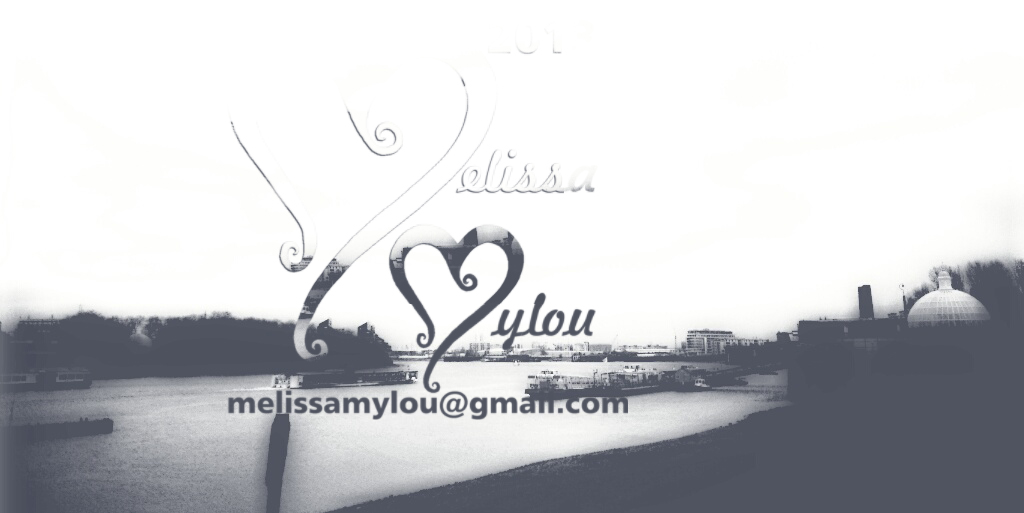
This photograph was taken on the south side of the river Thames at Greenwich. When it rains, London’s Victorian sewage system floods into the river, sewage ‘n all. The rivers tide will take the raw sewage out to sea eventually, it usually takes around three weeks.

The changing climate means London has received it’s fair share of rain and the EU directive on cleaning our rivers has seen the building of a new mega-structure, deep below ground. The Thames Tunnel, built along side the river Thames will carry London’s overflow, not into the river, instead it will travel to a water treatment plant where the water will be cleaned. The sandy beaches of the river Thames will see people paddling in the water without the danger of disease. Thames water have already said there will be an increase in water bills to help pay for the tunnel. Thanks to Margaret Thatcher, almost 20% of Thames Water is owned by foreign investment as well as an array of pension funds from across the globe, including British Telecom. Every time a Londoner now turns on the tap, those baby boomers who lunch will have another round of golf on a glass of water which is supposed to be a human right.

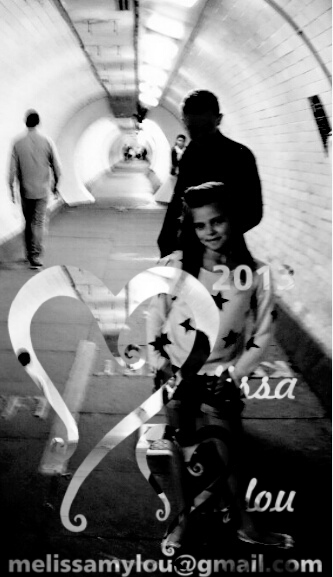
p20141205-202020 wThis picture was taken from under the river Thames. We stand in a Victorian tunnel that once transported people from Greenwich in south-east London to Millwall on the Isle of dogs (docklands), on the east side. My paternal great, great grand-father spent his working life in the docks as a tea blender while my maternal grand father spent his time there supporting Millwall football club. The shadow lurking behind is the shadow, according to Jung, that we all possess. The unacknowledged darkness will eventually project it’s way into our society, usually through violence and man’s inhumanity to man. London in 2015 is not the London I grew with as a child. Homelessness makes me feel powerless and I’ve noticed the rich, privileged and grammar school educated get the best jobs and the divide between the rich and the poor appears to be widening.

Honor Oak SE23

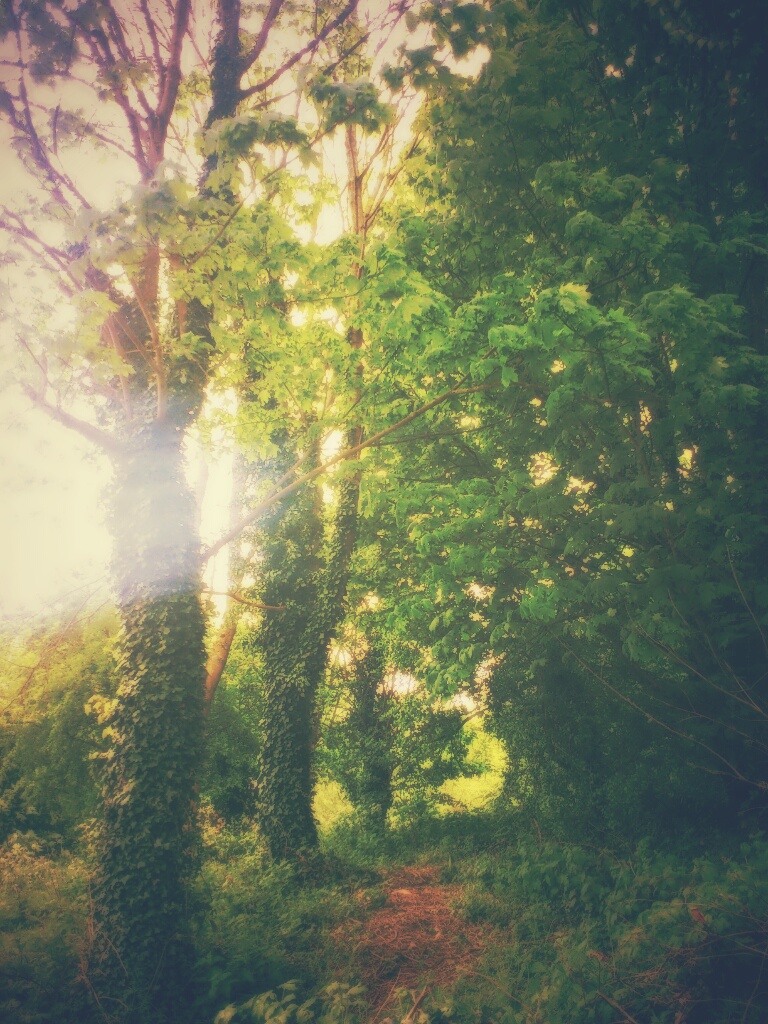
p20130518-155346I have fond memories of playing in the ancient forest that sat on the opposite side of the main road, from my house in Honor Oak, South East London. It was the same forest my dad played in as a child with his friends and brother. It was veiled in the mysticism of queens and war planes and if you listened carefully you could hear the trees breathing. I can remember the sun glistening through the gaps, revealing the blue sky beyond. My self-sufficiency would have me and my friends take a jam sandwich and watch the gardeners attend their allotments. And with my parents, a game of hide and seek was enjoyed as a family which was a happier time for my Dad.

I loved nature as a child even though the city of London ran through my mum’s veins. She loved London more than anything and given the choice of nature or a trip to the west end it would always be the latter.

Born in the early 1970’s I was a very much a screen child. Hopping between my television, hand-held computer games and my Commodore 64. I was obsessed with gaming, waiting for my tapes to load, Hungry Horace, Daly Thompsons Decathlon and Damsel in Distress were some of my favourites. Gaming was isolating then, it was stand alone and I spent most of the time in solitude, not communicating with anyone. Gaming now is very different, I often hear my son cackling inappropriately into his Xbox 360 mic.

We all need balance in our life, a life that has equal parts. Climbing trees, running through forests and splashing across streams nurtures the psyche. Trees feed tranquillity into our very being, they ground our existence on this earth. They have the ability to transport us to other worlds, with queens and war hero’s. A child’s imagination can run as free as their body through a forest that sparkles with sunlight.

Most of our possessions in the home come from the earth, in some format or another. Nature is the perfect way to help children understand the process of consumption and the impact that process may or may not have on the environment. The wooden chair I sit upon once stood rooted to the ground with branches and leaves.

Spending time watching a bumble bee collect pollen and explaining why we need bumble bees allows children to understand the connectedness of every living being. Finding a dead animal and talking about the ecosystem that’s right before your eyes encourages how the reliance of every living thing impacts upon each other. If one is out of balance, nature allows us to explore the impact on the rest of the chain.

Climate change sees local streams flooding and when we visit the same wild place regularly we can see the impact of climate change on an environment that is changing. We can connect with others and understand how their lives have been affected by devastating floods and typhoons, for example, those people in the Philippines. It encourages children to empathise with the rest of the earth and it encourages a debate that children need to have with themselves about the causes of a changing climate across the globe. It’s not about frightening children’s existence, it’s about creating a dialogue that needs to happen for the sake of humanity.

With earth, comes fire and spring is the best time to camp up around the fire pit. Some ancient cultures use the smoke from fire to communicate with ancestors, those who once roamed the earth. Our ancestors are important to our sense of who we are and a fire is a great opportunity to discuss with children those who came before us. My own children love roasting marshmallows, independently. My daughter has been proficient in fire pit safety since aged five, negotiating danger is important to children. It’s important because if they’re ever in danger they need to be able to know how to get out. If they’re never in danger they’ll never know how to get out of it.

Being outside and listening to silence embraces the presence of being human, the silence has the ability to touch the psyche in a way that the hustle and bustle of the city cannot. I live on the edge of the M25 and I find it difficult to listen to nature go about it’s daily business. As the lorries roar past, I feel their power in my chest. I’ve lived in silence, of an evening we would sit outside, around the fire and listen to owls hooting and bats swooping. I miss the silence tremendously.

Balance in life is key and it can exist but it can only exist if we allow it to. Sacrifices in life are key and we all make them, only some are different to others. What sacrifices will you make today? And who will benefit from them?